How Precise Storyboard Script Translation Prevents Costly Breakdowns in Cross-Border Short Drama Shoots
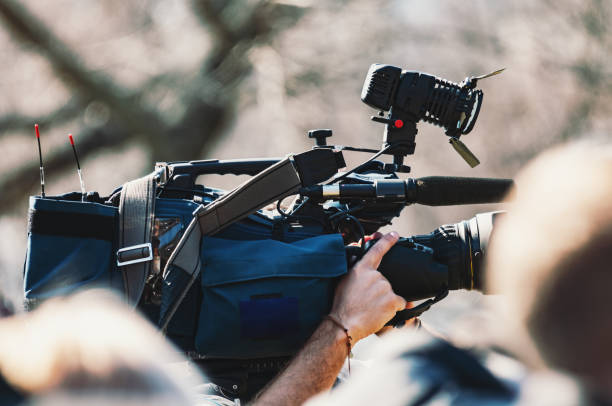
A director on location in Los Angeles opens the translated storyboard for a vertical short drama originally developed in another market. The note reads something like “hold the reaction for one more beat.” In the source language that phrase carries precise intent—dramatic pause, emotional weight, editorial timing. In the version handed to the crew it has flattened into a vague time reference. The actor delivers a flat reaction. The camera setup runs long. The next scene’s lighting has to be rebuilt. What should have been a tight two-minute episode starts chewing through overtime and day rates.
That kind of friction is common when short-form series cross borders. Storyboards sit at the junction of creative vision and practical execution. They carry camera directions, performance cues, emotional beats, and production shorthand that ordinary document translation often strips away. Once a misunderstanding enters the board, it spreads: wrong setup, misallocated time, performance that no longer matches the intended rhythm. Reshoots or heavy post fixes follow. Communication overhead rises as emails and calls multiply between the original writers, the foreign director, and the post team. The pain is concrete—higher costs, delayed delivery, and episodes that fail to land with the target audience.
Short dramas (also called micro-dramas or vertical series) have grown into a major mobile entertainment category precisely because of their speed and emotional density. Global revenue reached roughly $11 billion in 2025 and is projected to hit $14 billion by the end of 2026, according to Omdia, with markets outside the original source territories contributing a rising share and the United States already the largest international market. Media Partners Asia data shows the non-origin market alone moving from $1.4 billion in 2024 toward $9.5 billion by 2030. Audiences in different regions binge these 1-to-3-minute episodes on phones, but they respond to culturally tuned hooks, dialogue cadence, and visual timing. Literal or poorly adapted storyboards break that connection before the camera even rolls.
The difficulty is not simply vocabulary. Production language is dense with shorthand. A “beat” is not a stopwatch reading. Framing notes, movement cues, and reaction instructions rely on shared craft knowledge that does not travel automatically across languages. When video translation treats the storyboard as ordinary text, the result can be grammatically correct yet operationally useless. Scheduling suffers first: crews prepare the wrong setup or misjudge performance needs. Emotional design collapses next—the pause that was meant to heighten tension becomes dead air, or an exaggerated reaction turns melodrama. In cross-border shoots these gaps compound because the director, local crew, and original creative team often work across time zones and without a shared first language.
Experienced practitioners in the space have noted that successful overseas projects move beyond surface translation. Jiayan He, a Los Angeles-based writer and script supervisor who has worked on vertical dramas for multiple platforms, describes the work as protecting rhythm under pressure while reshaping Chinese short-drama engines—humiliation, power reversal, family pressure—into forms that feel natural in English-language performance. The same principle applies upstream at the storyboard stage. Cultural assumptions about gesture, hierarchy, or pacing must be adjusted so the foreign director and post team receive instructions that actually function on set and in the edit.
Data from industry observers reinforces the cost of getting this wrong. Early overseas short-drama efforts that relied on machine or minimal translation frequently saw high drop-off and low conversion; retention and completion rates improved markedly once scripts and supporting materials were rewritten for local attention triggers and emotional logic. One analysis of overseas projects found that roughly three-quarters of titles relying on literal approaches underperformed, while adapted versions routinely delivered stronger first-episode completion and lifetime value. Storyboard accuracy sits earlier in that chain: errors here force expensive corrections later rather than allowing the production to stay lean.
Proper storyboard script translation therefore functions as risk reduction and efficiency tool rather than a mere language service. It lowers communication volume by delivering documents that directors and post teams can act on without constant clarification. It reduces the chance of shooting material that later proves unusable or requires heavy rework. It preserves the original creative intent—pacing, emotional peaks, visual storytelling—while making it executable for a different production culture. In practice this means translators who understand both the source material’s dramatic structure and the target market’s production conventions, who can flag ambiguous shorthand, and who produce versions that retain the operational precision of the original board.
The payoff shows up in schedule reliability, budget control, and final audience metrics. Teams that treat the storyboard as a living production document rather than a static text file avoid the cascade of misunderstandings that turn a tight vertical series into a costly recovery exercise. In a category where episodes must land quickly and emotionally, that clarity is not optional.
Artlangs Translation has spent more than two decades refining exactly this kind of specialized work. With proficiency across 230-plus languages and a network of over 20,000 professional collaborators, the company has built a track record in translation services, video localization, short-drama subtitle localization, game localization, multilingual dubbing for short dramas and audiobooks, and multilingual data annotation and transcription. Its case experience spans high-volume episode packages and culturally adapted materials that move cleanly from original creative teams to foreign directors and post-production houses, helping productions keep communication costs contained and creative vision intact across borders.