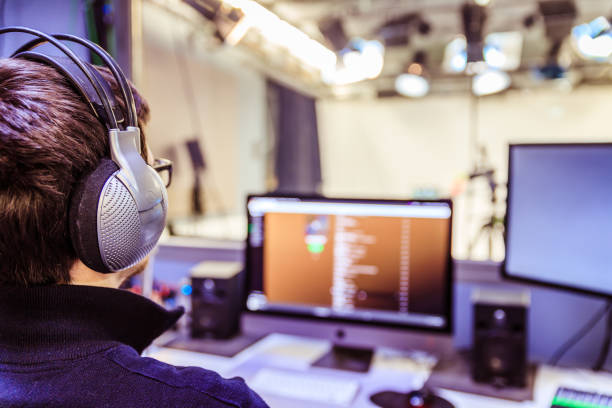
Shouting Over the Music: How to Actually Transcribe High-Noise Micro-Dramas Without Losing Your Mind
Imagine sitting in front of an editing monitor late at night, listening to a ninety-second clip of three actors screaming over a booming, high-tempo orchestral track. You’ve replayed the same four seconds fifteen times, and you still can't tell if the main character gasped out a desperate confession or just choked on a sob.
This is the chaotic, high-pressure reality of micro-drama post-production.
As vertical mini-series take over global screens, the pressure on localization teams to churn out translated episodes has become intense. But while viewers love the high-velocity drama, automated speech engines absolutely detest it. Heavy sound effects, weeping, yelling, and constant background music create a wall of sound that renders traditional transcription methods practically useless.
To turn this acoustic mess into pristine, timed scripts, localization engineers are abandoning basic speech-to-text tools in favor of highly specialized workflows. Here is a look at how real-world teams are conquering the noise and getting clean text out of chaotic audio.
The Wall of Sound: Stripping Out the Background Noise
The most immediate roadblock in short drama transcription is the sound design itself. In a typical micro-drama, the audio track is packed to the brim. The music is loud, the sound effects are dramatic, and they rarely stop to let the actors breathe.
When you feed this raw audio straight into standard software, the automated speech recognition engine gets completely confused. It tries to translate a cello swell or a car crash into words, resulting in bizarre strings of gibberish.
To bypass this, professional editors rely on vocal-BGM separation as their first line of defense.
Before any text is generated, the audio is run through AI-driven source separation models. This technology essentially splits the audio track into distinct, isolated layers: one stem for the instrumental music and sound effects, and another containing only the dry, naked vocals. When the speech recognition engine only has to listen to the isolated human voice, error rates drop dramatically. What once took hours of guessing and manual correction suddenly becomes a straightforward, clean read.
Shouting Matches: Fixing the Overlapping Speaker Nightmare
In the world of micro-dramas, characters rarely wait their turn to speak. Boardroom confrontations, dramatic family betrayals, and tearful breakups usually involve multiple actors shouting over one another at the exact same time.
For standard speech engines, this is a fatal flaw. They tend to merge overlapping voices into a single, garbled paragraph of text, completely destroying the narrative flow and making it impossible to tell who is actually speaking.
Solving this requires a heavy reliance on multi-speaker identification and diarization technology.
Instead of just listening to the words, speaker diarization systems analyze the unique acoustic fingerprints of the voices. Even when two actors are talking at once, the system can distinguish between their vocal frequencies and split the transcription into separate dialogue lanes. When this is integrated with a smart video script extraction tool, the software can automatically map the right words to the right characters on the timeline. It saves editors from the exhausting task of manually tagging speakers frame by frame.
The Slang Barrier: Navigating Regional Accents and Dialects
Even with clean audio and separated speakers, local accents and fast-paced street slang can easily derail an automated transcriber. This is particularly true when adapting content for rapidly growing international markets, such as Thai or Indonesian localized dramas.
Standard engines trained on formal, textbook languages fall flat when tasked with regional micro-drama transcription. In Thai, fast-paced conversational particles and regional dialects often get lost in translation. In Indonesian, the heavy mix of informal street slang and English loanwords creates a linguistic puzzle that standard AI simply cannot solve.
To get past this barrier, localization teams utilize a specialized, high-precision dictation service backed by localized acoustic models. These models are trained on regional social media, local TV shows, and real-world conversations rather than sterile voice recordings. This allows the system to recognize colloquial phrasing, heavy accents, and rapid-fire banter, ensuring the cultural flavor of the original dialogue isn't lost in the transcription process.
Reclaiming the Hours Lost to Timeline Alignment
Even the most accurate transcript is useless if it isn't perfectly synced to the video. Manually adjusting timestamps for a hundred-episode series—where scenes change every few seconds—is a recipe for burnout.
To keep up with the breakneck speed of modern distribution, platforms are shifting toward short drama script auto-generation tools. These platforms use smart alignment algorithms to sync the transcribed text to the video's timecodes in real-time.
However, technology alone isn't a silver bullet. The sweet spot of micro-drama localization always involves a hybrid approach: letting automated engines handle the grueling work of separating audio, sorting speakers, and drafting the initial timeline, while native human linguists step in to polish the cultural nuances and catch the emotional subtleties that machines miss.
The Path to Seamless Global Localization
Scaling micro-dramas for a global audience requires a partner who understands both the technological hurdles and the cultural nuances of multimedia translation. Artlangs Translation brings over twenty years of dedicated industry experience to the table, helping creators navigate the complex world of global media localization. With a vast network of over twenty thousand professional native linguists, the company specializes in translating across more than two hundred and thirty languages.
Focusing on the unique demands of modern entertainment, Artlangs Translation delivers top-tier services in video and short drama subtitle localization, game localization, audiobook dubbing, and high-precision multilingual data annotation and transcription. By combining advanced acoustic technology with deep human expertise, they ensure that every dramatic beat, regional dialect, and punchy line of dialogue resonates perfectly with audiences worldwide.